15
DecAlgarah: Where Myths, Mountains, and Forgotten Kingdoms Converge
A Traveler’s Historical Lens on Eastern Himalaya’s Most Overlooked Cultural Crossroads
Hidden behind the tourist-heavy silhouettes of Darjeeling and the postcard charm of
Kalimpong, the Algarah region unfolds like a forgotten manuscript of the Eastern
Himalayas—weathered, layered, and deeply symbolic. For the traveler who looks beyond tea
gardens and colonial facades, Algarah offers something rarer: a living intersection of
mythology, belief systems, political transitions, and mountain survival ethics.
This is not merely a destination. Algarah is a cultural residue—shaped by animistic
traditions, tantric folklore, Bhutanese Drukpa authority, and later absorbed into the
colonial geography that birthed modern Kalimpong and Darjeeling
Geography as Destiny: Algarah’s Strategic Location
Algarah sits on a ridge linking Kalimpong, Lava–Lolegaon, Reshikhola, Shitong, and the
forest corridors leading toward Bhutan and Sikkim. Historically, this was not a
peripheral space but a transit zone—a mountain threshold through which people, belief
systems, and power structures flowed.
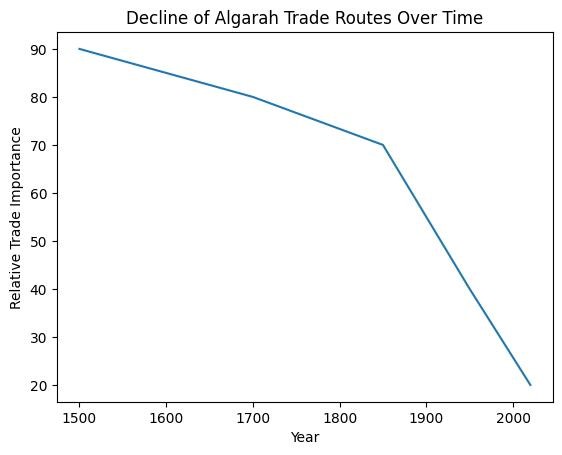
Before roads connected Deolo Hill to Kalimpong town, and long before Glenary’s became a
Darjeeling icon, these ridges functioned as seasonal routes for traders, monks, and
forest dwellers.
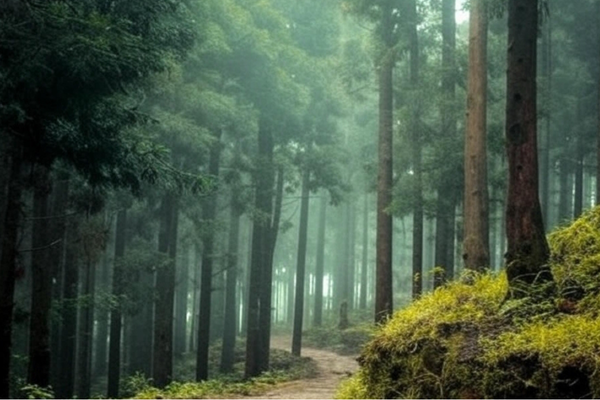
From a traveler’s perspective today, the silence of Algarah’s forests masks a
once-thriving cultural artery.
The People Before Borders: Indigenous Communities of Algarah
The earliest inhabitants of Algarah were not subjects of a kingdom but custodians of
terrain. Ethnic groups such as Lepchas, Tamang, Rai, and later Bhutia settlers formed a
mosaic society rooted in nature worship rather than centralized governance.
Their belief system revolved around:
 • Forest spirits
• Mountain guardians
• River deities
• River deities
• Ancestor worship tied to specific rocks, trees, and caves
For them, geography was sacred text.
Traveling through Algarah today, one still encounters stones smeared with vermilion,
prayer flags tied to ancient trees, and shrines without names—signifiers of a worldview
that predates organized religion.
The Pisach-Siddha Raja: Myth or Mountain Memory?
Perhaps the most haunting narrative of Algarah revolves around the Pisach-siddha Raja—a
ruler believed to have mastered occult forces through tantric practices associated with
pisacha (liminal, forest-dwelling entities in Himalayan folklore).
Unlike demonized versions in mainstream mythology, in local memory this king was:
•A protector of forest boundaries
• A mediator between human settlements and wild zones
• A ruler whose power came from ritual isolation and spiritual discipline
Stories speak of:
Night-time rituals near caves, Weather control through chants, Forests that punished
trespassers without permission
As a traveler, one realizes these tales functioned less as horror stories and more as
ecological governance systems, enforcing respect for land through myth.
Drukpa Bhutan’s Expansion and the End of Indigenous Rule
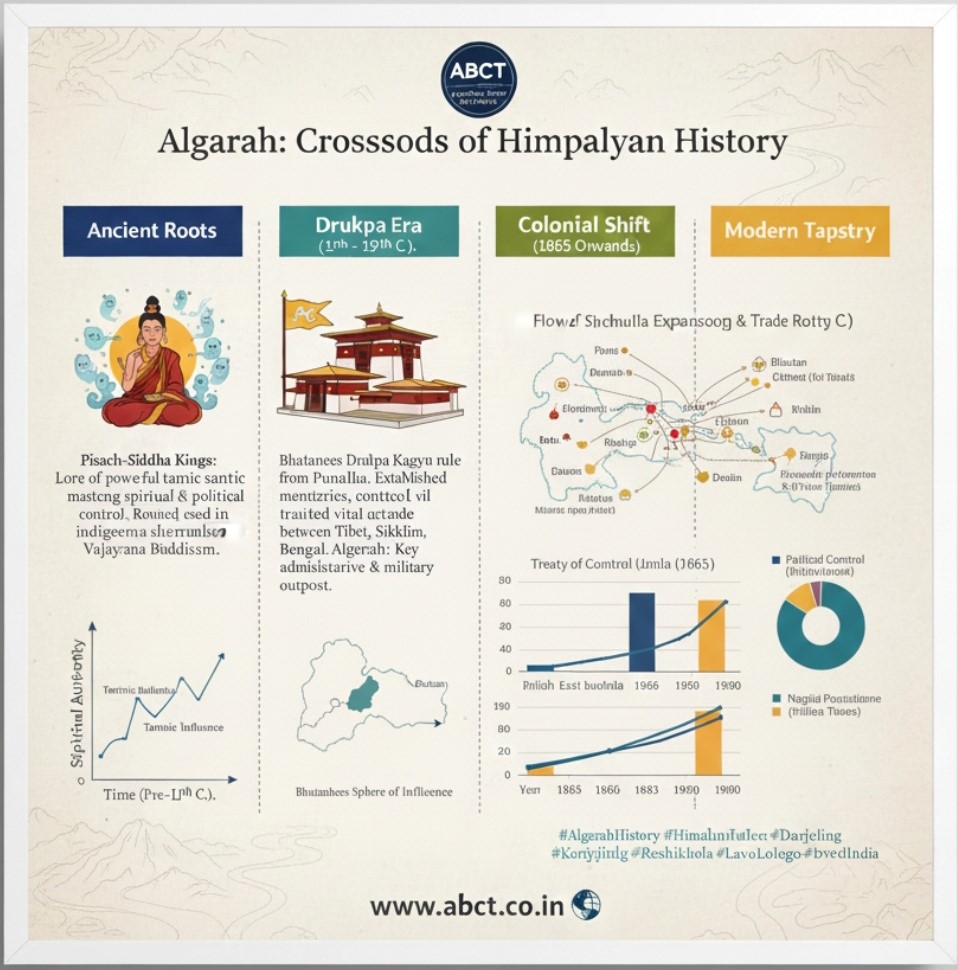
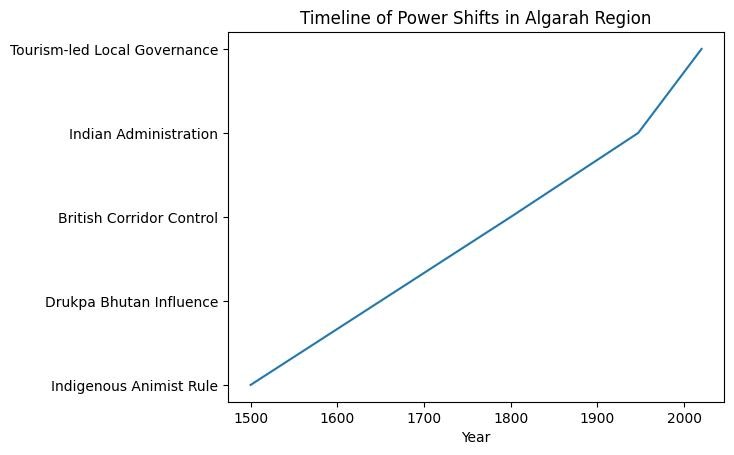
By the 17th century, the Eastern Himalayas witnessed the political rise of Bhutan’s
Drukpa theocracy. Algarah, along with Kalimpong and the Dooars, came under Bhutanese
influence—not as colonies, but as buffer zones.
The Drukpas:
• Introduced Tibetan Buddhism
• Built monasteries and administrative outposts
• Replaced animistic governance with religious authority
• The Pisach-siddha tradition faded—not violently, but gradually—absorbed or erased by
institutional religion.
For Algarah, this transition marked a philosophical shift from forest-centric
spirituality to monastic cosmology.
Kalimpong, Darjeeling, and the Colonial Rewriting of Space British colonial expansion
further transformed the region. While Darjeeling was shaped as a hill station and
Kalimpong as a trade hub (especially after the opening of the Jelep La trade route),
Algarah remained administratively marginal.
Colonial cartography:
• Ignored indigenous sacred geographies
• Prioritized tea, trade, and roads
• Reduced myth-rich regions into “forest reserves”
Yet Algarah survived as a cultural buffer—too remote to be erased, too connected to be
forgotten.
Even today, travelers moving between Kalimpong, Lava, Lolegaon, and Darjeeling
unknowingly pass through layers of suppressed history.
Modern Algarah practices a hybrid belief system:
Buddhist rituals coexist with animistic offerings ,Local deities are worshipped alongside Buddhist protectors Festivals follow agricultural calendars, not temple schedules.This syncretism reflects centuries of adaptation rather than conversion. As a traveler, participating in village rituals reveals a crucial truth: belief here is functional, not performative.
Algarah Today: Memory, Migration, and Meaning
Today, Algarah faces challenges familiar across the Himalayas:
• Youth migration
• Eco-tourism pressure
• Cultural dilution
Yet it also holds potential—not as a tourist hotspot, but as a cultural archive.
For those who travel slowly, listen deeply, and ask questions, Algarah offers something
Darjeeling’s cafes and Kalimpong’s viewpoints cannot: historical intimacy.
Why Algarah Matters to the Conscious Traveler
Algarah reminds us that destinations are not products. They are processes—shaped by
belief, power, fear, adaptation, and survival.
To walk its trails is to walk through:
• Forgotten kingdoms
• Silenced spirits
• Shifting borders
And perhaps, to question what progress truly means in the mountains..

Debajit Ghosh
A mountain lover who loves to explore and document it through words.
